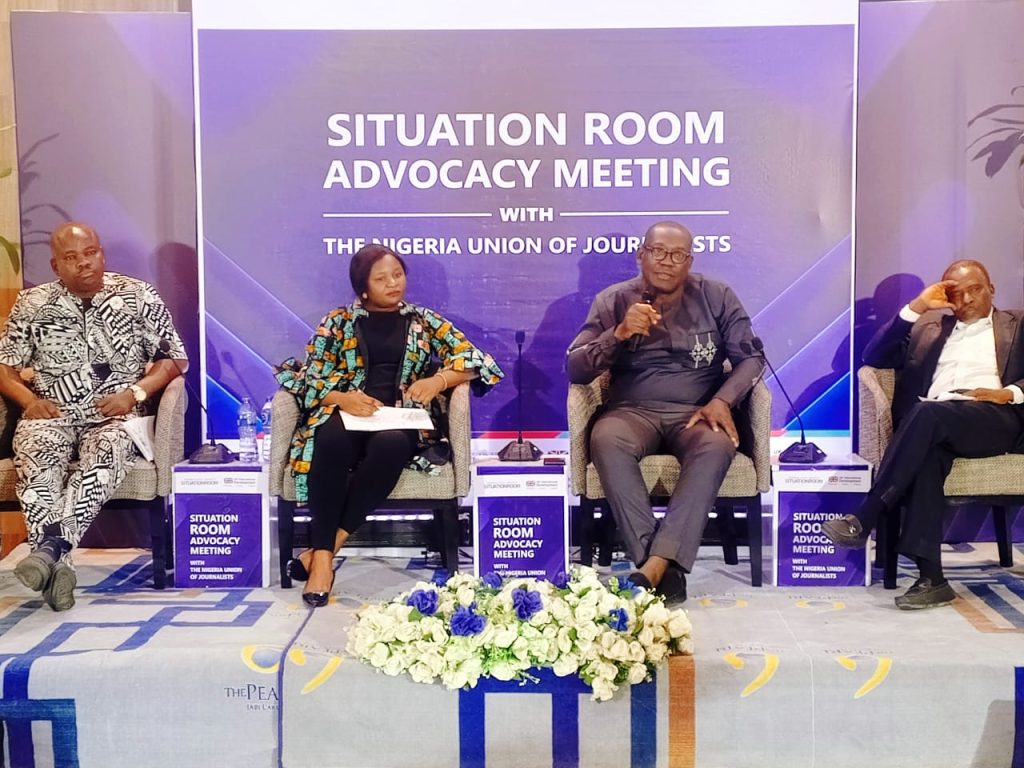
Ahead of next general elections, the Nigeria Civil Society Situation Room has called for a review of appointments into the nation’s electoral commission. Convener of the Situation Room, YZ Ya’u, made the call during an engagement with Nigeria Union of Journalists (NUJ) on election credibility in Abuja on Friday.
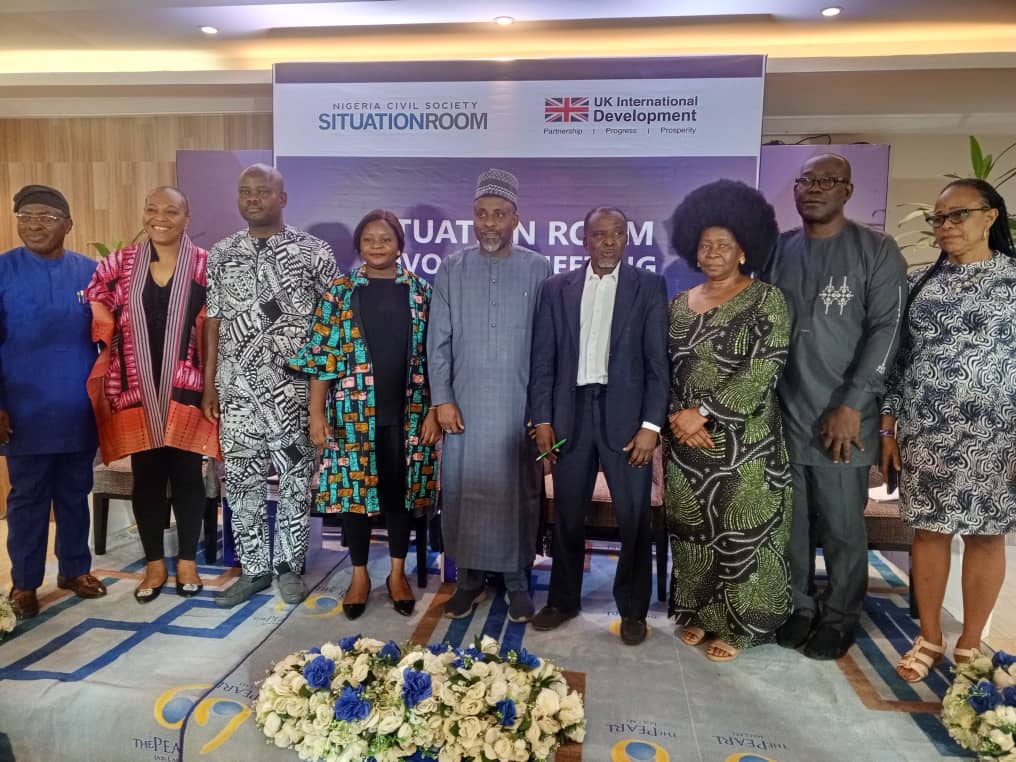
Ya’u questioned the appointments of persons who are partisan into the Independent National Electoral Commission (INEC).
He said the call is imperative as the process to appoint a new national chairman for INEC would soon commence as the tenure of Prof. Yakubu Mahmud nears its end.
He said the next set of appointees at INEC should be people that will be ready to do the right thing and not to compromise on rules and standards of electoral process.
He said that this became necessary following a series of unfulfilled expectations for free and fair elections.
“It is important that we ensure that people appointed into the leadership of INEC, whether as its chairman or Resident commissioners, are persons with credibility and integrity devoid of partisanship,” he said.

He added, “This is one major election coming and the government has not made any serious effort in terms of addressing the flaws that we observed in the 2023 general election and previous elections.
“We haven’t seen any executive bill sent to the legislature that will address any of the issues people have raised.”
Ya’u said the engagement was meant to flag off discussions on the way forward in reforming our electoral system to ensure a more credible and transparent election.
While presenting some key highlights of the 2023 general election, a civil society activist, Aghanpe Onyema, said that the poor use of IREV electronic devices by INEC was responsible for most of the disputed results.
She said that the Electoral Act needs to be further amended in order to take care of current realities.
Lead discussant, Bukola Idowu of Kimpact Development Initiative, said that no matter what the wishes and expectations of Nigerians are for a credible election, a defective Electoral Act will always render such expectations untenable .
For instance, he pointed out that what caused most of the flaws of the last 2023 presidential election was that whereas INEC was expected to transmit election results via the IREV, such was not expressly stated in Nigeria’s constitution.
He listed key factors that affected the credibility of election in Nigeria to include; election framework, Election Management Board (EMB) selection and appointment, election delimitation, selection security.
Others are political party management, electoral justice, political finance, electoral education, electoral logistics and procurement, political office incentives and misinformation and disinformation.
According to him, there is need for a strong media sector that is not election day focused but process driven.
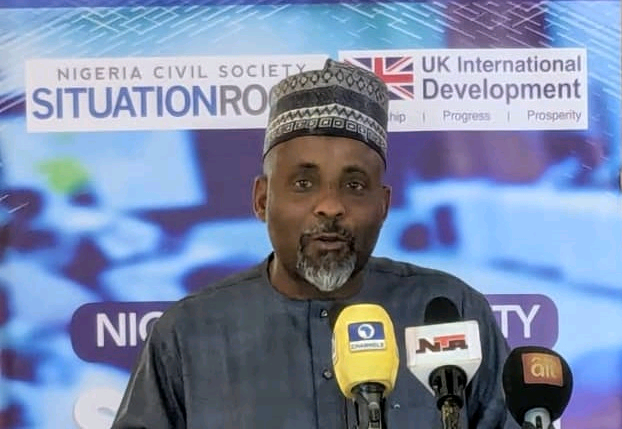
National President of NUJ, Comrade Alhassan Yahaya, pledged the collaboration of journalists with civil society organizations.
He assured that journalists will play a pivotal role in the processes towards having credible elections in 2027.

COMMUNIQUE ISSUED FROM THE NIGERIA CIVIL SOCIETY SITUATION ROOM ADVOCACY MEETING WITH THE NIGERIA UNION OF JOURNALISTS (NUJ) ON PROMOTING ELECTORAL INTEGRITY IN NIGERIA
Issued in Abuja on Friday, 28th February 2025
𝗕𝗮𝗰𝗸𝗴𝗿𝗼𝘂𝗻𝗱
The Nigeria Civil Society Situation Room convened an advocacy meeting with the Nigeria Union of Journalists (NUJ), on Friday, 28th February 2025 in Abuja to discuss issues bordering on electoral integrity in Nigeria. The meeting brought together key stakeholders in the media and civil society to discuss potential partnership to promote credibility and accountability in Nigeria’s elections.
The meeting also aimed to foster a deeper understanding of election credibility, raise public awareness, and strengthen advocacy efforts for reform in Nigeria’s electoral processes.
𝗢𝗯𝘀𝗲𝗿𝘃𝗮𝘁𝗶𝗼𝗻𝘀
Participants at the meeting noted the following key issues that impact on elections in Nigeria negatively:
- Persistent attack on journalists and the failure of the security agencies to bring perpetrators to justice.
- Political influence in media ownership.
- Reoccurring electoral malpractices, including vote buying and result manipulation, which undermine public confidence in the democratic process.
- Credibility of the nomination and screening processes into the Independent National Electoral Commission (INEC) and State Independent Electoral Commissions (SIECs).
- Independence of INEC and SIECs.
- The failure to unbundle INEC.
- The proliferation of misinformation and fake news, particularly on digital platforms by political actors and influencers, which misleads voters, create confusion and discordance among the citizens.
- Poor internal party democracy.
- Inconsistencies and unreliability of the Nigeria’s voter register
- The necessity for adherence to ethical reporting standards to ensure balanced and fact-based election coverage.

Consequently, the following resolutions were reached:
𝗠𝗲𝗱𝗶𝗮
- The media should hold government and public officials to account as enshrined in section 22 of the 1999 Constitution of the Federal Republic of Nigeria (as amended).
- Journalists should sustain reporting and public communication on issues of election credibility.
- Journalists should prioritize investigative and objective reporting to expose electoral malpractices and hold political actors to account.
- The media practitioners should step-up advocacy for policy reforms that promote press freedom, media independence, and electoral accountability in Nigeria.
- Media organizations should collaborate with civil society groups to enhance voter education and civic engagement in the country.
𝗧𝗵𝗲 𝗣𝗿𝗲𝘀𝗶𝗱𝗲𝗻𝘁
- Given that there are impending vacancies in INEC, the President should ensure that no politically exposed persons are nominated into INEC.
- The President should also protect the independence of the Judiciary and INEC.
𝗡𝗮𝘁𝗶𝗼𝗻𝗮𝗹 𝗔𝘀𝘀𝗲𝗺𝗯𝗹𝘆
- The National Assembly should work towards unbundling INEC including moving voter education responsibility to the National Orientation Agency (NOA), and expedite on the Election Offences Commission Bill.
- Should amend the electoral act to mandate compulsory electronic transmission of election results to limit manipulation.
- The Senate should be more diligent and sensitive in its vetting process of nominees into INEC and ensure the opinions of the civil society and the media are considered during thee screening.
𝗜𝗡𝗘𝗖
- INEC should publish on its website and disseminate information regarding both prosecuted and unprosecuted cases of electoral malpractices till date.
- INEC should provide the public with details of its financial allocations, expenditure and procurement processes.
- INEC should be diligent in its work at regulating political parties and ensure that parties’ reports of campaign finance are submitted and published timeously.
𝗧𝗵𝗲 𝗣𝗼𝗹𝗶𝗰𝗲/𝗦𝗲𝗰𝘂𝗿𝗶𝘁𝘆
- The Nigerian Police Force (NPF) which is the lead agency in election security in Nigeria should provide a public update on their investigation and prosecution of perpetrators of attacks against journalists and observers during the 2023 General elections. According to the Press Attack Tracker of the Centre for Journalism Innovation and Development (CJID), 89 journalists were attacked in the 2023 General Elections in the country.
- Work to eliminate militarisation of elections in Nigeria.
- Security agencies must protect journalists covering elections and guarantee press freedom in line with democratic principles.
- The meeting also called for a greater collaboration between the security agencies and the media to prevent attack, harassment and intimidation of journalists on civic duties.
𝗣𝗼𝗹𝗶𝘁𝗶𝗰𝗮𝗹 𝗽𝗮𝗿𝘁𝗶𝗲𝘀
- The political parties are urged to imbibe internal party democracy, including keeping a proper and standard register of members, adhering to extant laws on political and campaign financing, and upholding the rule of law in their operations and practices.
- Political parties must fulfil their responsibility as required by law to deploy party agents to all levels of election in which they are involved.
- Political parties and candidates must commit to issue-based campaigns and refrain from skipping public debates before elections.
𝗖𝗼𝗻𝗰𝗹𝘂𝘀𝗶𝗼𝗻
The Nigeria Civil Society Situation Room and NUJ reaffirmed their commitment to working collectively to promote credible, transparent, and accountable elections and called on all stakeholders to uphold democratic principles and ensure the integrity of elections in Nigeria.
𝑆𝑖𝑔𝑛𝑒𝑑:
𝐘𝐙 𝐘𝐚’𝐮
Convener, Nigeria Civil Society Situation Room
𝐀𝐥𝐡𝐚𝐬𝐬𝐚𝐧 𝐘𝐚𝐡𝐚𝐲𝐚
National President, the Nigeria Union of Journalists (NUJ)