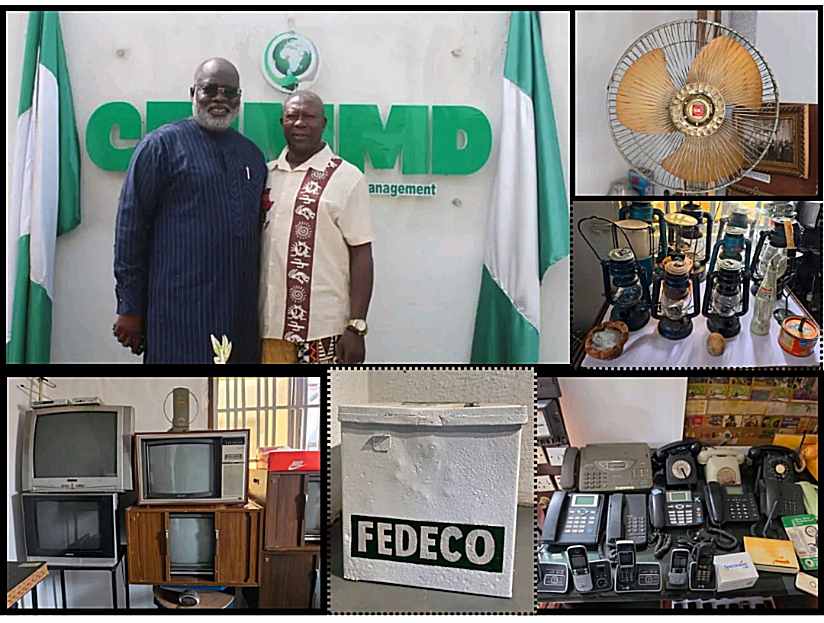
There are places you hear about only in passing, names whispered in conversations, mentioned in passing comments, or buried in the middle of an engaging discussion. Yet sometimes, curiosity and an insatiable thirst for knowledge compel you to seek them out.
I count myself fortunate to belong to a remarkable community brought together by Kunle Kasumu of the Channels Television Book Club. The Nigerian History WhatsApp Group is more than a social platform; it is an intellectual powerhouse, a gathering of minds passionately committed to understanding the complexities, triumphs, and untold stories of Nigeria.
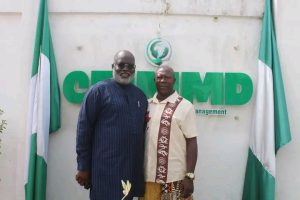
Recently, a member shared an autobiography that sparked a lively discussion. As often happens among lovers of history, one conversation led to another. In the early hours of the morning today, I found myself engrossed in the thoughtful contributions of Dr. Raphael James, founder of the Centre for Research Information Management and Media Development (CRIMMD) Library & Museum.
Without planning to, I set out on a journey that would lead me to what I consider one of the finest privately owned museums in Nigeria.
Located at 3 Peace and Faith Close, Ajao Estate, Lagos, directly opposite a primary school, the museum immediately struck me as a priceless educational resource. I could not help but imagine the possibilities for the children who pass by it every day. Within walking distance lies a world capable of inspiring future historians, archaeologists, curators, writers, and researchers.
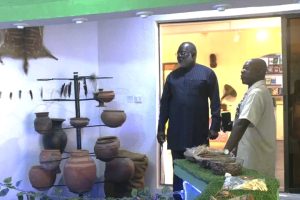
From the moment you step into the complex, you are welcomed by a photography exhibition featuring the works of Dr. James’ son, an Ordinary National Diploma graduate in Photography from Yaba College of Technology. As I admired his work, my mind wandered to my own upcoming Experience Centre and the exciting possibilities for collaboration.
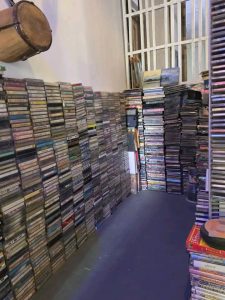
Adjacent to the exhibition is the museum bookshop, a treasure trove for collectors and lovers of Nigerian history. I was delighted to discover several titles already in my library and even more thrilled to purchase some rare books that are increasingly difficult to find.
Our journey began in the Natural Living Section, a thought-provoking exhibition that explores the relationship between Nigerians and their environment before colonialism. Through displays of insects, preserved animals, traditional pottery, and everyday objects, Dr. James vividly narrated how communities once lived in harmony with nature.
His storytelling invites a deeper reflection: how did we drift so far from the sustainable ways of our ancestors? And why are institutions and governments not doing more to support initiatives like this labour of love?
One particularly fascinating exhibit was the plastic bottle collection. Here, history unfolds through ordinary objects often discarded without a second thought. I saw the first Ragolis bottled water container, an iconic brand often regarded as a pioneer in Nigeria’s bottled water industry alongside bottles from Swan and numerous other brands spanning decades.
As we climbed the staircase, my eyes were drawn to the photographs lining the walls. They chronicled Dr. James’ encounters with some of Nigeria’s most distinguished personalities, from renowned educationist Tai Solarin to celebrated academics, authors, and cultural icons.
It felt like walking through a gallery of Nigeria’s intellectual heritage.
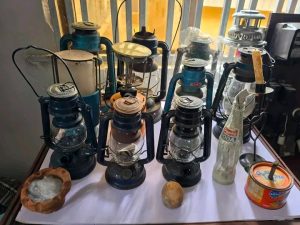
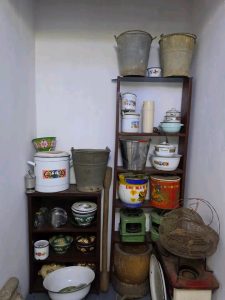
The nostalgia continued upstairs. We explored collections of enamelware once used by our parents and grandparents for storing water, cooling drinks, and serving meals. I even spotted the type of bucket I used during my secondary school days in the 1970s, a simple object that instantly transported me back in time.
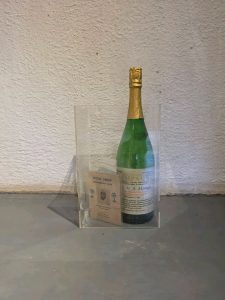
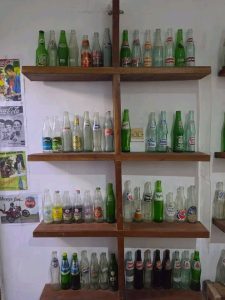
Nearby was an extensive collection of beverage bottles, including some of the earliest Coca-Cola bottles produced in Nigeria, alongside numerous soft drink brands that have come and gone over the years.
For visitors in their sixties and beyond, the museum is a portal to cherished memories. For younger generations, it offers a rare opportunity to understand a world they never knew existed.
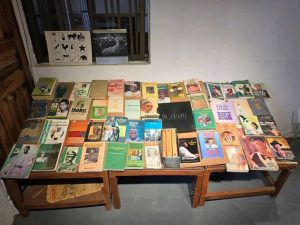
The museum’s book collection includes autobiographies of Nigeria’s past heads of state, official speeches, and historical documents that provide invaluable insights into the nation’s political evolution.
Portraits of Nigeria’s leaders, from Lord Lugard to contemporary figures, offer a visual timeline of the country’s complex journey.
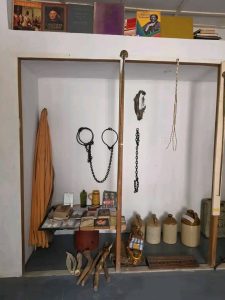
The War Museum section is especially compelling. It houses an extensive collection of books on the Nigerian Civil War, photographs, Biafran currency, and original currency containers used during the conflict.
It is impossible to walk through this section without reflecting on the profound impact of the war on Nigeria’s history and identity.
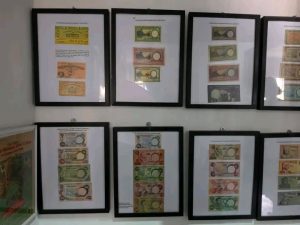
Among the highlights of my visit were the postage stamp and currency sections.
Dr. James proudly informed me that he possesses one of the largest private collections of Nigerian postage stamps. Collectors and researchers will find the collection invaluable, with rare stamps dating back several decades.
The exhibits trace the fascinating evolution of communication and commerce in Nigeria, from pre-colonial trade items such as cowries, manillas, and tobacco money to modern currency systems.
According to the museum’s displays, Nigeria’s first post office was established in Lagos in 1851 as a branch of the British General Post Office, while the country’s first definitive postage stamps were issued in 1874, featuring the portrait of Queen Victoria.
The currency section reveals that before colonial rule, Nigerians used cowries, beads, salt, feathers, and manillas as mediums of exchange. The introduction of the naira in 1973 marked a significant shift from the British pound system inherited during colonial rule. More recently, the redesign of the naira notes in 2022 represents another chapter in the ongoing story of Nigeria’s economic development.
Standing before these exhibits, I was reminded that Nigeria’s history extends far beyond oil and gas. Ours is a nation rich in culture, innovation, commerce, and resilience.
As a photographer, the media section was especially captivating.
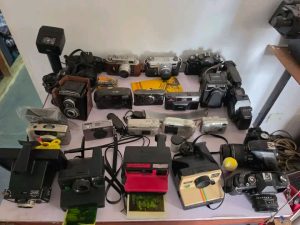
I encountered an impressive collection of cameras spanning generations, from large-format 5×4 cameras and Polaroids to twin-lens reflex cameras, 35mm film cameras, and early video equipment.
It is the perfect place to bring Generation Z children to appreciate how far technology has advanced.
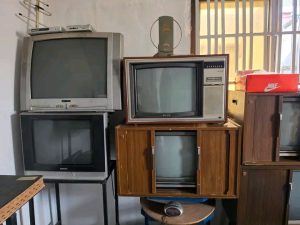
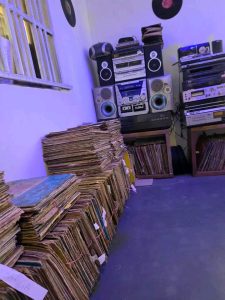
There were vintage television sets I had not seen in over four decades and a radiogram purchased in 1945 that once belonged to the father of the late Chief Alex Akinyele, former Minister of Information.
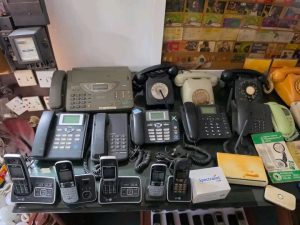
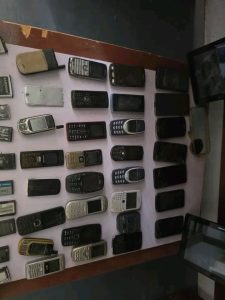
The telecommunications section offers a nostalgic journey through the evolution of communication technology, showcasing fixed-line telephones and more than thirty mobile phone models, including the legendary Nokia 3310, widely regarded as one of the most durable mobile phones ever produced.
Among the personal artefacts on display are the shoes of Chief Dele Momodu and Chief Alex Akinyele, adding an intimate human touch to the museum’s extensive collections.
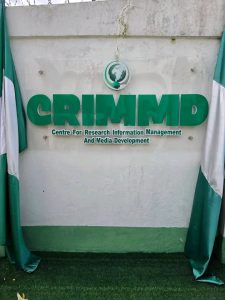
The CRIMMD Library & Museum is not simply a repository of objects; it is a living archive of Nigerian memory.
To fully appreciate its rich collections, visitors should set aside at least four to five hours. And after your tour, the rooftop bar offers a relaxing space to reflect on the incredible stories you have encountered.
I know I will return, this time with my children, so they can better understand our past, appreciate our present, and imagine a more informed future.
My heartfelt gratitude goes to Dr. Raphael James for his generosity, hospitality, and unwavering commitment to preserving Nigeria’s history.
His work reminds us that history is not merely about the past; it is about identity, memory, and the responsibility we owe future generations.
In a country often preoccupied with tomorrow, Dr. James has chosen to safeguard yesterday.
And for that, Nigeria owes him a debt of gratitude.
‘𝘿𝘼𝙔𝙊 𝘼𝘿𝙀𝘿𝘼𝙔𝙊 𝙞𝙨 𝙖 𝙉𝙞𝙜𝙚𝙧𝙞𝙖𝙣 𝘿𝙤𝙘𝙪𝙢𝙚𝙣𝙩𝙖𝙧𝙮 𝙋𝙝𝙤𝙩𝙤𝙜𝙧𝙖𝙥𝙝𝙚𝙧, 𝘼𝙧𝙩𝙞𝙨𝙩, 𝘾𝙪𝙡𝙩𝙪𝙧𝙖𝙡 𝘼𝙣𝙩𝙝𝙧𝙤𝙥𝙤𝙡𝙤𝙜𝙞𝙨𝙩, 𝙖𝙣𝙙 𝘼𝙪𝙩𝙝𝙤𝙧